





Timo Kokko: Green Anomie
KUMMA, Kuopio
- 9.1.2026–8.3.2026
The exhibition transforms the gallery into a green space where nature can only be experienced as preserved, artificial, and unchanging.
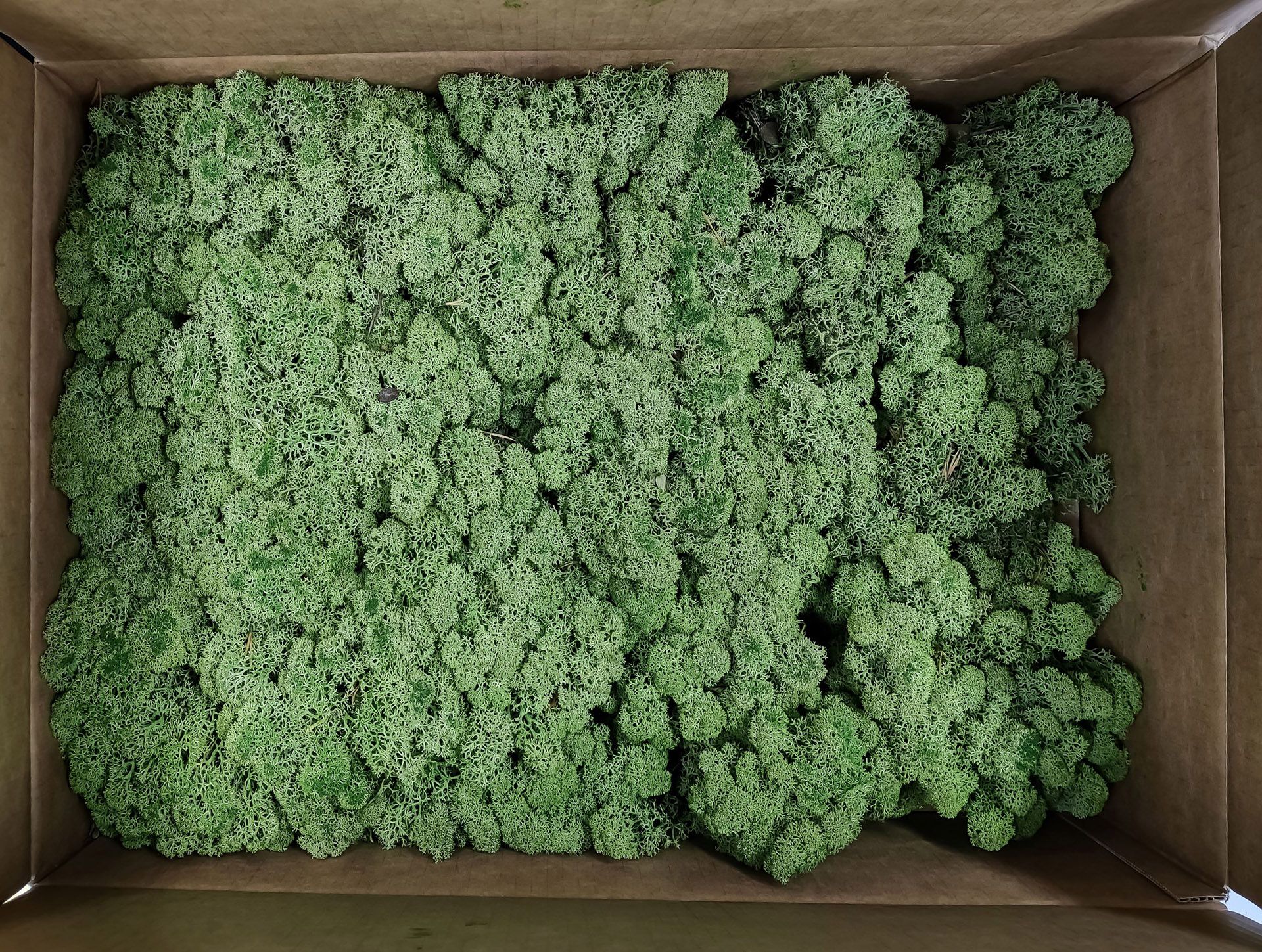
The exhibition transforms the gallery into a green space where nature can only be experienced as preserved, artificial, and unchanging. It imitates what life looks like when its cycle is halted.
Green anomie is a state in which ecological values and meanings have collapsed. Nature remains present as form and color, but it lacks life and growth.
The exhibition addresses death, impermanence, crisis, ending, and closure. It raises questions about the relationship between humans and nature, the meaning of authenticity, values, rules, indifference, and vanity. All works are new, and the exhibition continues the Momentary Appearance series, which I have been developing since 2012. Materials include stabilized mosses and plants, as well as a preserved forest owned by the artist.
Timo Kokko is a visual artist from Kuopio. He graduated with an MFA from the Academy of Fine Arts at the University of the Arts Helsinki. Kokko studies materiality, immateriality, space, light and observation through installations and sculptures. He produces art through the observation and research of the environment, approaching the arts from scientific perspectives, often relying on experimentation, psychology, biology, chemistry, and visual anthropology. Kokko's work deals with ecological values and questions about humanity. Humans, nature, time, moment, and ephemerality are reoccurring themes in his works.
Momentary Appearance
I have previously explored death in my works through plants: terrariums and a greenhouse-effect simulator at the Mänttä Art Festival, where I examined and invited viewers to experience the slow death of nature. In the Äärellä exhibition in Mänttä, a dead forest was packed into boxes and displayed in the living room of an apartment.
The Momentary Appearance series began in 2012, when I experienced the birth of my child and the death of a friend within a short period of time. That same spring, I visited the University of Tartu’s Faculty of Medicine, where I had the opportunity to observe an autopsy. The first completed work related to this theme was shown in 2015. Earlier works held hope and life strongly at their core: viewers could influence the amount of light and heat the plants received, or the works themselves generated new life. Now, death is at the center.
Speak of the devil and it shall appear.
I began working on this exhibition in the autumn of 2024. The state of the world at the time clearly influenced the works. My brother died in May 2025, and death had never been closer to my life than at that moment. I felt anger and even blamed myself, almost superstitiously: because I had been researching the subject, death felt like my fault.
The death of a loved one and the grief that follows blur one’s ability to process things. What once felt clear and meaningful became strange and distant, and I no longer understood what I was making for the exhibition. I processed things too quickly and made poor decisions.
Background Research and Anticipatory Sensitivity
I returned to my childhood favorite artwork, Hugo Simberg’s Garden of Death (1896). Simberg feels like a kindred spirit: both of us observed the slow death of nature and examined the changes taking place within it. Simberg turned those observations into figures; I packed nature into plastic boxes as a message and material for future works. In terms of artistic research, we have both participated in an autopsy, and its influence has been evident.
It may be selfish to think of oneself and depict oneself through natural beings. As an artist, I often place myself in uncomfortable positions. I use materials and methods that are questionable. Writing and engaging deeply with the subject through background research helped unravel the tangle of thoughts and emotions in my mind: I structured, clarified, and understood ideas and concepts. The feeling of guilt dissipated. In the autumn of 2025, the works began to take a meaningful and honest form.
Anticipatory sensitivity is one of the reasons I am an artist. The ability to notice and articulate emerging phenomena before they appear in broader discussions is, in my view, an essential quality for an artist. The best thing about death and grief is the freedom they allow, freedom to think (and to be without being questioned?). Perhaps that sense of freedom is what makes death feel close to my artistic practice.
Mänttä, 27 November 2025
The exhibition has been realized in collaboration with InnoGreen. InnoGreen is a Finnish company providing green services, whose core values include ecological responsibility. The company produces sustainable green products, such as green walls and green furniture, contributing to the greening and comfort of urban environments.
With thanks to the Arts Promotion Centre Finland / Arts Council of North Savo for supporting my work.
Sources
Stewen, Riikka, 1995, Hugo Simberg – Painter of Dreams, Otava.
Share this with your friends!



Museum exhibitions
Museum events
- Juha Valkeapää: Animal beings
10.1.2026 - Juha Valkeapää: Animal beings
11.1.2026 - Yleisöopastus Kummaan keitokseen
11.1.2026 - Yleisöopastus Kummaan keitokseen
8.2.2026 - Yleisöopastus Kummaan keitokseen
22.2.2026 - Yleisöopastus Kummaan keitokseen
8.3.2026 - Yleisöopastus Kummaan keitokseen
22.3.2026 - Yleisöopastus Kummaan keitokseen
5.4.2026 - Yleisöopastus Kummaan keitokseen
19.4.2026
Osana kulttuurikierrosta
Museum contact details

KUMMA
Kauppakatu 35, 70100 Kuopio
017 182 633
Yhteydet julkisilla
Näytä reitti museolle Matkahuollon reittioppaassa

Katso reitti Matkahuollon reittioppaassa
Päämäärä:
KUMMA, Kauppakatu 35, 70100 Kuopio
Lähtöpiste:
Admission fees

12/6/0 €
Payment methods
käteinen, yleisimmät pankki- ja luottokortit, SmartumPay, Smartum-setelit, EdenRed-kortti, EdenRed-setelit, ePassi, Tyky-setelit
Opening hours
| Mon | Closed |
| Tue | 10:00-17:00 |
| Wed | 11:00-18:00 |
| Thu | 10:00-17:00 |
| Fri | 10:00-17:00 |
| Sat | 10:00-17:00 |
| Sun | 10:00-17:00 |